Blog · Social · 2024-09-05 · By vanderbis Editorial Team
From Random Posting to a Social Content Operating System for Cross-Border B2B Brands
Cross-border B2B brands do not need more scattered posts. They need a social content system that turns real business knowledge into repeatable demand-building assets.
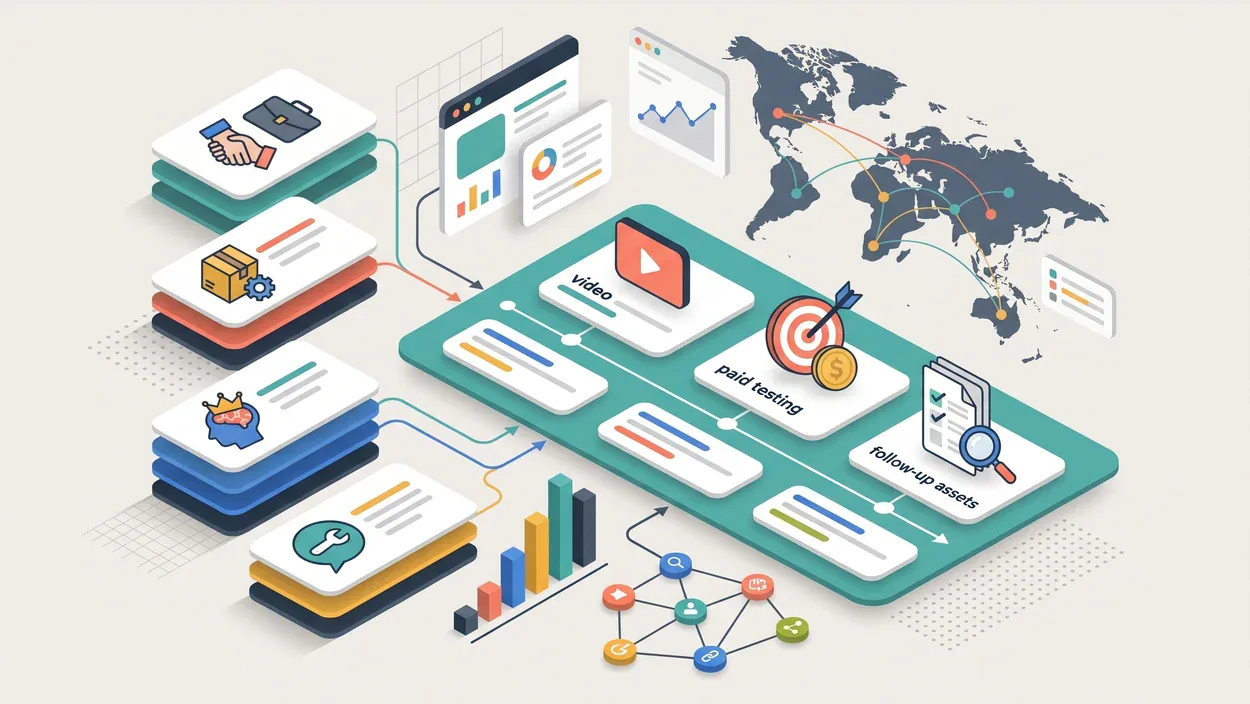
Many B2B brands post on social media as if each post has to be invented from zero. This creates inconsistency, weak creative, and unclear learning. A better approach is to build a content operating system: a repeatable process for choosing topics, producing assets, testing formats, and feeding insights back into sales and marketing.
The best source of content is usually already inside the business. Sales calls reveal objections. Customer service reveals friction. Product teams reveal technical differentiation. Founders reveal strategic beliefs. Demos, trade shows, packaging lines, onboarding calls, and project reviews all contain material that can become useful social content. The system's job is to capture these signals before they disappear.
For cross-border B2B brands, content should do three jobs at once: explain, prove, and reduce perceived risk. Explanation helps buyers understand the category. Proof shows that the company can deliver. Risk reduction makes the buyer feel safer about quality, communication, logistics, compliance, and after-sales support. Every content calendar should balance these three jobs.
Video creative should not be limited to polished brand films. In many cases, simple repeatable formats perform better because they feel direct and useful. Examples include one problem one answer, product comparison clips, process walkthroughs, founder commentary, customer use-case breakdowns, and short myth-busting videos. The goal is not cinematic beauty; the goal is buyer confidence.
A content operating system also makes paid media smarter. Instead of guessing which messages deserve budget, the brand can test organic and low-budget video variations first. The winning hooks, objections, demonstrations, and founder clips can then become paid creative, landing page sections, email content, and sales follow-up material. Social media becomes a learning engine, not just a publishing calendar.
How to apply this idea
- Build content pillars around buyer questions, category education, proof, founder voice, and conversion paths.
- Plan formats by channel role instead of posting the same asset everywhere.
- Use comments, saves, inquiries, and sales questions as inputs for the next calendar.
- Keep a simple editorial standard so quality survives weekly production pressure.
What to avoid
Do not confuse volume with trust. Social media helps growth when the audience can remember what the brand stands for.
Related service